OpenClaw vs Hermes Agent — anyone setting up a self-hosted AI agent in 2026 almost inevitably ends up choosing between these two names. Both are open source, both run on your own server, both connect a language model to real tools: terminal, browser, messengers, files, cron jobs. And both promise the same thing: an assistant that doesn’t forget who you are after every chat.
Our perspective up front, full transparency: we have been running an OpenClaw agent in production for months — it co-writes this blog, monitors our servers, manages deployments, and communicates via Discord, WhatsApp, and Signal. We took a thorough look at Hermes Agent because the question lands on the table with every new project. This comparison explains why we stayed with OpenClaw — and in which cases Hermes can still be the right choice. No bashing, but a clear opinion.
OpenClaw vs Hermes Agent: The Short Version
For everyone who just needs the decision:
- You want a personal assistant that manages your life and your servers via messenger: OpenClaw
- You want maximum maturity, community size, and stability in continuous operation: OpenClaw
- You primarily want to work with open-weights models and enjoy experimenting with agent learning behavior: Look at Hermes Agent
- You want serverless setups that cost almost nothing when idle: Hermes has interesting options here
- You want it in production this week and want to rely on docs + community: OpenClaw
Both projects deserve to be taken seriously. But they have different priorities, and those decide which tool fits you.
What Is OpenClaw?
OpenClaw is an open-source framework for personal AI agents built on a simple but powerful principle: one gateway process connects a language model of your choice to messengers, tools, and a file-based memory. The agent runs permanently on your server — from a $5 VPS to a beefy machine — and you talk to it where you already are: WhatsApp, Signal, Telegram, Discord, Slack, and plenty more.
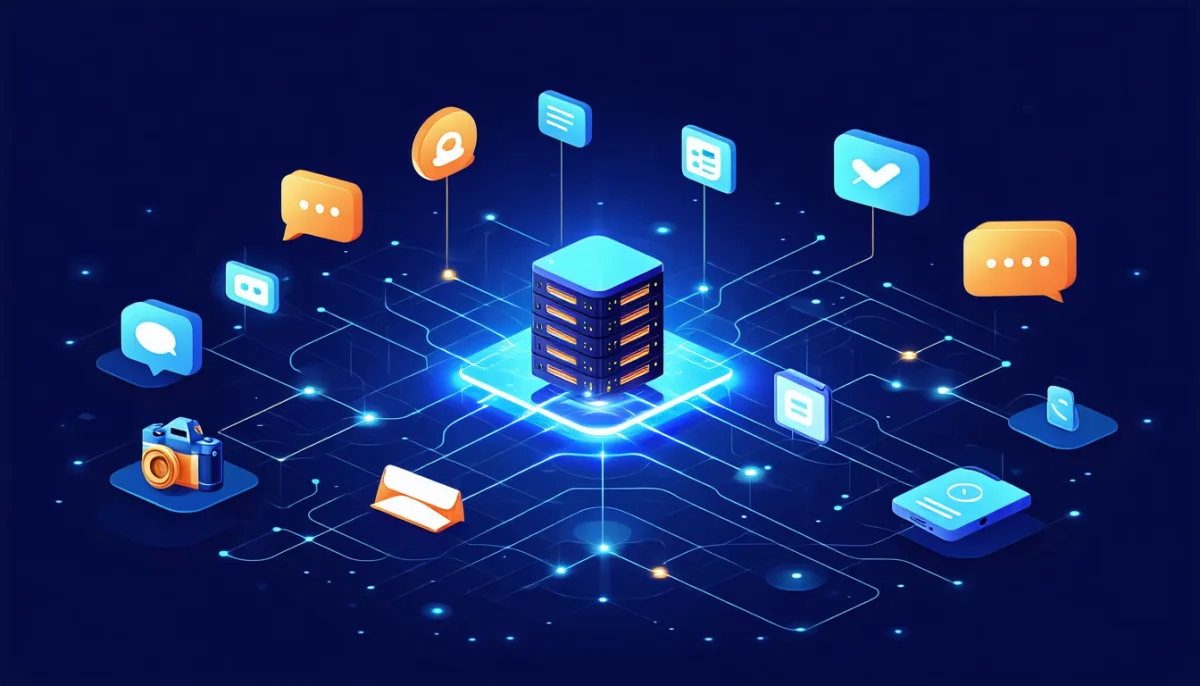
The building blocks that define OpenClaw in daily use:
- Channels: One agent, many channels. The same instance answers you privately on Signal, participates in Discord, and sends you reports via WhatsApp — with context separation between channels.
- Tools: Shell access, browser control, file operations, web search, image and audio processing, subagents for parallel tasks — all built in, none of it duct tape.
- Memory as files: The memory lives in Markdown files in the agent’s workspace. AGENTS.md for rules, MEMORY.md and daily notes for recollections, plus freely structured knowledge files. Human-readable, versionable, greppable.
- Automation: Built-in scheduler for cron jobs, heartbeats (the agent wakes up regularly and works proactively), webhooks, and multi-agent routing.
- Model agnosticism: Anthropic, OpenAI, Google, local models via OpenAI-compatible endpoints — the model is swappable; the agent (its files, its memory, its personality) persists.
The project has grown explosively and has one of the most active communities in the agent space — with everything that entails: a huge ecosystem of skills and guides, but also growing pains we’ll talk about honestly in a moment.
What Is Hermes Agent?
Hermes Agent comes from Nous Research — the lab that became known for its open Hermes models — and appeared in early 2026. The concept overlaps heavily with OpenClaw: an autonomous agent on your own infrastructure, 20+ chat platforms, 40+ built-in tools, cron automation, subagents, skills.
The most striking difference lies in its self-image: Hermes markets itself as a self-improving agent with a closed learning loop. It is supposed to create and improve skills from experience on its own, regularly nudge itself to persist knowledge, and build an ever-deepening model of who you are via a user model (through Honcho). On top of that come technically interesting ideas: six terminal backends (local, Docker, SSH, and serverless environments like Daytona or Modal that hibernate when idle and cost almost nothing) and “Programmatic Tool Calling,” which collapses multi-step tool chains into a single code call.
Sounds strong — and on paper it is. The decisive question is how much of it holds up in daily use. That is exactly where our real comparison begins.
Memory: Files You Can Read vs a Learning Loop You Have to Trust
Memory is the heart of a personal agent — without recollection, every assistant is just a chatbot with a tool belt. This is where the philosophies differ fundamentally.

OpenClaw bets on radical transparency: everything the agent knows about you and its tasks lives in plain-text files. You can read, correct, delete, or extend every memory — with any text editor. Wrong memory? Change the line. Something the agent must never forget? Write it into AGENTS.md. Backup? git commit. Moving to a new server or a new model? Copy the files, done — the agent remains the same “character” with the same history.
This approach sounds mundane but is worth gold in practice. After months of operation, our agent is a unique creature made of hundreds of grown files — project handbooks, learned lessons, contact knowledge, runbooks for our servers. And we can always trace why it behaves the way it does.
Hermes bets on automation: agent-curated memory with periodic nudges, automatic skill creation from experience, full-text recall across sessions, plus the Honcho user model. The agent is supposed to handle remembering itself so you don’t have to care.
Our honest assessment: OpenClaw agents curate their memory themselves too — both systems learn automatically. The real difference is how much of that process lies open on the table. In OpenClaw, every learning step produces a readable file you can inspect, correct, or revert. In Hermes, the curation loop runs deeper under the hood — more autonomous, but harder to debug when the agent drifts into strange habits. We prefer the approach where the human can see and override every step. It’s less futuristic — but it’s dependable, and dependability is no side issue for an agent with shell access.
Maturity and Community: The Underrated Factor
Here lies our strongest argument, and it’s unspectacular: both frameworks have millions of users — but OpenClaw has the head start of months of additional production time, and its ecosystem was already mature when Hermes appeared.

That shows in a thousand small things you only notice when you actually run an agent permanently:
- Edge cases have been sanded down. Session compaction in long conversations, rate-limit handling, reconnects after messenger outages, context isolation between groups and DMs — the unsexy problems young frameworks bleed on have been found and fixed in OpenClaw through sheer mass of usage.
- There’s prior work for almost everything. Skills, guides, blog posts, forum discussions. Our agent uses skills for everything from calendar management to image generation — the probability that someone has already solved your problem is simply higher.
- The docs cover operations, not just onboarding. Security, multi-agent setups, connecting secondary devices as nodes, debugging — documented from real operational experience.
Hermes Agent is growing impressively fast and has a competent team behind it in Nous Research — the model-trainer perspective shows in the project in a positive way. But an ecosystem cannot be compressed: it emerges from the time users spend finding, reporting, and solving problems — and OpenClaw simply has more of that time under its belt. Anyone setting up an agent for continuous operation today benefits from that head start every single day.
Security: An Agent with Shell Access Is Responsibility
Both frameworks give the model real power: terminal, files, browser, messages. This is the point where “cool toy” quickly becomes “security incident” — we wrote an entire experience report about it from painful firsthand experience.
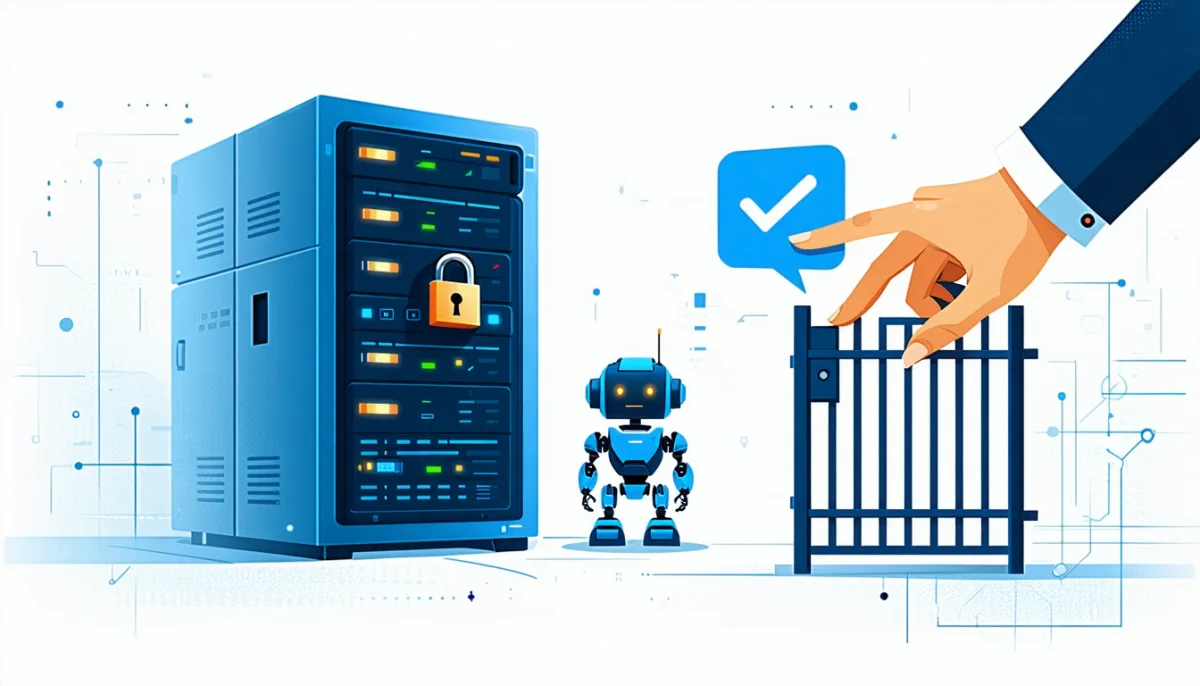
Both projects take the topic seriously: command approval mechanisms, container isolation, and configurable permissions exist in both. The differences again lie in the maturity of the surroundings: OpenClaw’s security model has been real-world-tested far more extensively through its large user base, the channel permission system (who may command the agent to do what?) is finely grained, and the community docs cover topics like prompt injection through incoming messages in depth — an attack vector many underestimate once their agent suddenly becomes publicly reachable via messenger.
Regardless of the framework: never run an agent with more privileges than necessary, keep it away from production databases, and treat every incoming message as potentially hostile. Both tools give you the switches for that — flipping them is on you.
Governance: Foundation vs Venture Capital
An often-overlooked question when choosing a framework you hand shell access to: who is behind it, and what are their incentives?
OpenClaw is governed by the OpenClaw Foundation — a 501(c)(3) non-profit, MIT-licensed, modeled after Linux, Apache, and Mozilla. The foundation’s mission is simple: “Your agent, your machine, your rules.” It employs a dedicated engineering team, is chaired by Dave Morin with creator Peter Steinberger as technical lead, and is backed by donors including OpenAI, NVIDIA, Microsoft, Red Hat, the University of Michigan, and others. No investors expecting returns, no growth-at-all-costs pressure, no exit strategy. The code belongs to the community.
Hermes Agent is built by Nous Research — a venture-backed company currently raising $75M+ at a $1.5 billion valuation, with investors including Paradigm, Robot Ventures, and Balaji Srinivasan. That’s not inherently bad — venture funding enables fast development. But it creates fundamentally different incentives: investors want returns, and returns require either an exit or monetization of the user base. For an agent that lives on your server, reads your files, and sends your messages, the question of whose interests the development serves is not academic.
The difference already shows in practice: OpenClaw’s growth has been entirely organic — 384,000 GitHub stars without a marketing budget. Hermes reached 218,000 stars in five months, but persistent astroturfing accusations from the community suggest not all of that momentum is organic. When a project’s response to a plagiarism accusation is to delete the GitHub issue, remove comments, and block users, that tells you something about how dissent is handled — and that matters for a tool you’re supposed to trust with your infrastructure.
For self-hosters — people who chose to run their own agent precisely because they value independence — the governance model isn’t a footnote. It’s the foundation everything else sits on.
Models: Provider-Agnostic vs Open-Weights DNA
OpenClaw is consistently model-agnostic. In practice it most commonly runs with Claude models (which lead in agentic tasks — we explain why in our Claude guide), but OpenAI, Google, and local models work just as well. The crucial point: because identity and memory live in files, you can switch models without losing the agent. We have carried our agent through several model generations — it stayed itself.
Hermes carries the open-weights DNA of Nous Research. It works with every major provider, but the integration with the in-house open Hermes models and the Nous Portal is recognizably the centerpiece. If independence from commercial API providers matters to you — for cost, privacy, or conviction reasons — that is a genuine argument for Hermes: the team trains models itself and optimizes the agent for them.
Our practical experience, however, is soberingly clear: the quality of the agent stands and falls with the quality of the model. For long-running, multi-step tasks (deploy this, monitor that, write the report), the gap between top models and open alternatives remains noticeable. An agent that loses the thread at step 7 of 12 costs more time than it saves — which is why we run Claude in OpenClaw, and why Hermes’ open-weights advantage shrinks for everyone who ends up with the commercial top model anyway.
Operations and Daily Life: Where the Difference Really Shows
A few everyday observations that don’t appear in feature lists:
Messenger integration as a first-class citizen. OpenClaw feels like it was designed from the messenger outward: voice notes get transcribed, images understood, reactions set, group contexts cleanly separated, native replies/quotes supported. The agent is a contact in your list, not a terminal window. Hermes covers an impressive number of platforms (including exotic ones like Home Assistant or BlueBubbles), but the depth of individual integrations varies — many channels doesn’t automatically mean every channel is polished.
Proactivity. OpenClaw’s heartbeat system — the agent wakes up regularly, checks its task list, and becomes active on its own — sounds like a detail but completely changes your relationship with the tool. Our agent reports server problems before we notice them and reminds us of deadlines without being asked. Hermes has similar mechanics with cron and nudges; OpenClaw’s implementation is, in our view, the more mature interpretation of “the agent lives even when you’re not chatting.”
Multi-agent setups. Both can spawn subagents. OpenClaw can additionally route multiple fully-fledged, separate agents with their own workspaces on one instance — practical when family or team members should get their own assistants with their own memory.
Serverless flexibility. Here Hermes scores: backends like Daytona or Modal that hibernate when idle are charming for occasional use — an agent that only generates costs when it works. OpenClaw wants a permanently running process; on a small VPS that costs just a few euros a month, but the Hermes model is conceptually more elegant for sporadic use. The price: a hibernating agent can’t run heartbeats and can’t notice anything proactively — for a true personal assistant, continuous operation is not a bug in our view, but the whole point.
Setup Compared: How Fast Are You Productive?
Both projects have greatly simplified onboarding, but the paths differ.
OpenClaw: installation via script or npm, then an onboarding wizard walks you through model connection and your first channel. Realistic timeframe until the first WhatsApp or Discord message to your own agent: under an hour, including basic VPS setup. The real work starts afterwards — and that’s not a weakness, it’s the concept: the agent grows over weeks through its workspace files. You write down who you are, what it’s responsible for, which rules apply. A generic assistant becomes a personal one — this investment pays off daily, but you should know it’s coming.
Hermes Agent: install script or desktop installer, then hermes setup --portal — a single OAuth login covers the model plus web search, image generation, TTS, and browser. That’s elegantly solved and the fastest path to a fully equipped agent for beginners. The price of convenience: the portal route ties you to the Nous ecosystem; if you want your own keys and full control, you configure by hand just like with OpenClaw.
Bottom line: Hermes wins the first hour, OpenClaw wins the first month. For a weekend test, Hermes’ onboarding is more charming; for a system that’s supposed to work with you permanently, the first hour matters least.
What an Agent Actually Does Day to Day: Examples from Our Operation
So the comparison doesn’t stay abstract — this is what productive agent work looks like for us concretely, all via OpenClaw:
- Server monitoring with initiative: the agent checks services, certificates, and backups via heartbeat. When a service failed at night, it was repaired and documented before anyone got up in the morning.
- Content pipeline: research, image generation, writing and deploying blog articles like this one — including build verification and a success report via Discord.
- Deployment assistant: “Deploy the fix and check the site still works” as a chat message from the road. The agent builds, deploys, tests via curl, and reports the result.
- Business memory: client contexts, project decisions, learned lessons — stored as searchable files, retrievable by asking a question in the messenger.
None of this is wizardry, and in principle Hermes can grow into each of these roles. But every one of these routines hangs on dozens of small things — stable reconnects, reliable cron delivery, dependable file workflows — and that is exactly where the maturity difference shows in continuous operation.
OpenClaw vs Hermes Agent: Head-to-Head
| Criterion | OpenClaw | Hermes Agent |
|---|---|---|
| Release | Late 2025, established | February 2026, young |
| Origin | Community-driven | Nous Research (model lab) |
| Governance | Non-profit foundation (501c3) | VC-backed ($1.5B valuation) |
| Memory | Plain-text files, fully transparent | Auto-curated + user model |
| Skills | Huge ecosystem, open standard | Auto skill creation, agentskills.io compatible |
| Messengers | Very deep integrations | Very many platforms |
| Models | Fully agnostic | Agnostic with open-weights focus |
| Deployment | Persistent process (VPS from ~$5) | Also serverless (Daytona/Modal) |
| Community & docs | Very large, battle-tested | Growing, good, but younger |
| Ideal for | Personal assistant in continuous operation | Open-weights-first setups, serverless/sporadic use |
What Does Operation Realistically Cost?
Both frameworks are free — the real costs sit next to them and are structured almost identically for both:
- Server: a small VPS (2–4 GB RAM) is plenty for one agent — $5 to $10 a month. Hermes’ serverless backends can push that toward cents for sporadic use, at the cost of proactivity.
- Model API: the biggest item and entirely usage-dependent. A frugal assistant with daily tasks lands at $5–$20 a month; an intensively working agent (many long tasks, large contexts) can reach ten times that. Flat-rate subscriptions from model providers can pay off quickly.
- Your time: the omitted item. Budget a few hours in the first weeks for setup, rule-writing, and fine-tuning — after that the sign flips and the agent saves you more time each week than it costs.
Conclusion: Why We’re Staying with OpenClaw
Hermes Agent is the most interesting new project in the agent space — technically ambitious, built by a team that truly understands models, with fresh ideas around the learning loop and serverless operation. If you like experimenting or deliberately bet on open models, you should take a look.
But for the purpose that actually matters — a dependable personal agent that works productively month after month — OpenClaw is, in our view, the clearly better choice: the transparent file memory makes the agent traceable, portable, and persistent across model changes. The maturity of framework and community spares you the edge cases young projects still have to find. The messenger and proactivity features are the most polished on the market. And the ecosystem answers questions before you ask them.
The most honest sentence to close with: this comparison was co-written by an OpenClaw agent that has been part of our team for months. When a tool works so well that it writes its own comparison article while monitoring the servers on the side — that might be the most convincing argument of all.
FAQ: Common Questions About OpenClaw vs Hermes Agent
Are OpenClaw and Hermes Agent free? Both frameworks are open source and free. Running costs come from the server (from ~$5/month) and the model API (typically $5–$50/month depending on usage) — equally for both.
Can I switch from Hermes to OpenClaw (or vice versa)? Yes, but there’s no auto-import. Since OpenClaw keeps its memory in Markdown files, migrating to it is easier: place knowledge as files in the workspace, done.
Which model should I use with OpenClaw? For agentic tasks, Claude models currently lead (details in our Claude guide). But OpenClaw works with every major provider and local models.
Do I need programming skills? Basic server skills (opening SSH, editing a config file) are entirely sufficient to start with both frameworks. If you want to automate deeper — custom skills, webhooks, multi-agent setups — shell and Git basics help noticeably, but you pick them up along the way.
Can I test both in parallel? Easily — on the same server with separate directories and separate API keys. For a fair comparison, give both the same real tasks from your daily life and let them run for two weeks; the difference shows in continuous operation, not in the first session.
What about privacy with self-hosted agents? Self-hosting means memory, files, and chat histories stay on your server — a real advantage over cloud assistants. Message contents still go to the model API (Anthropic, OpenAI & co.) unless you run a local model. For most, that’s the acceptable middle ground; full sovereignty only comes with open-weights models on your own hardware — the point where Hermes’ origin becomes interesting.
Isn’t an agent with shell access dangerous? It’s as dangerous as its configuration. Both frameworks offer approval mechanisms and isolation. Minimal privileges, a separate environment for production matters, and healthy skepticism toward incoming messages are mandatory — our report on five days of server nightmare shows why.
More on the topic: What is Claude? explains the model behind most productive agent setups, and our AI coding tools comparison maps the agent landscape for programming.