
Shopify vs Shopware — or Shopware vs Shopify, depending on which side you come from — is not a matter of taste. It is an arithmetic problem with two unknowns: your revenue and your development capacity. Yet most comparisons online answer it with adjectives — “user-friendly” versus “flexible”, “quick to launch” versus “fully customisable”. None of that is wrong. It is simply useless, because you cannot make a decision with it.
So for this article we measured three things ourselves instead of quoting them:
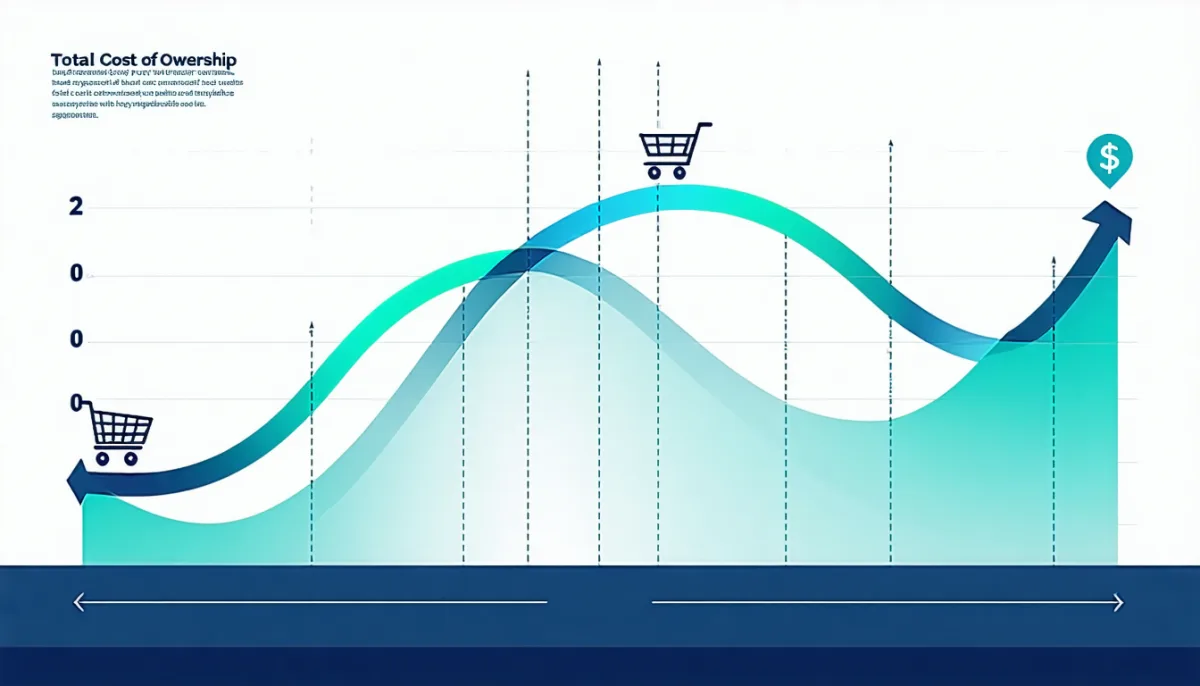
- The total cost. We modelled both systems — plan fees, transaction fees, hosting, maintenance — and calculated the point where the relationship flips. It sits somewhere other than most people assume.
- The data model. Shopware is open source, so its product model can be counted. Shopify’s product model can be queried through the public API. Both numbers appear side by side below.
- The maintenance. Who actually keeps Shopware alive? We analysed six months of commits, excluded bots and determined the bus factor.
All prices and figures were collected on 9 August 2026 directly from the vendors and the repositories, and re-checked on 25 August 2026. Where we had to correct ourselves while measuring, we say so — that is part of the method.
Update, 25 August 2026: while re-checking the prices we noticed that Shopify now publishes the card fee for the Plus plan (1.3% + €0.30) — at our first collection there was no number there. This changes the maths for large stores and refutes one clause of our first version. We corrected the affected passages rather than quietly leaving them standing; the new calculation is in Shopware vs Shopify from the other direction.
Shopify vs Shopware: the difference in one sentence
With Shopify you rent a finished store, with Shopware you operate your own. Everything else follows from that.
Shopify is a SaaS platform: hosting, updates, security, scaling and support all come in one price. You also get the boundaries of that package, and you cannot move them — the source code is not yours, and you never even see it.
Shopware 6 is open source under the MIT licence. The complete code sits publicly on GitHub. You can read it, change it, host it yourself and extend it in any direction. In return you carry operations, updates, security and performance yourself — or you pay someone to carry them.
That is the real axis. Not “which system can do more”, but how much control do you need, and how much responsibility will you take for it?
The prices, straight from the vendors
Hard numbers first. Both pricing tables were retrieved on 9 August 2026 directly from the vendors’ own pages.
Shopify (German pricing page, annual billing)
| Plan | Monthly (annual billing) | Monthly (monthly billing) | Online card fee |
|---|---|---|---|
| Basic | €27 | €36 | 2.1% + €0.30 |
| Grow | €79 | €105 | 1.8% + €0.30 |
| Advanced | €289 | €384 | 1.6% + €0.30 |
| Plus | from €2,100 | — | 1.3% + €0.30 |
Two details that comparisons routinely skip:
The third-party payment fee is a lock-in. Anyone on Shopify who does not use Shopify Payments pays an extra 0.2% to 2% to Shopify — on top of their own provider’s fees. At €100,000 monthly revenue on the Grow plan that is €1,000 per month purely for the privilege of using a different payment provider. That is not a footnote, it is a switching barrier with a price tag.
The Plus card rate was not public for a long time — now it is. At our first collection the page only said “most competitive rates”. We did not invent a Plus rate back then; we calculated with the published Advanced rate, because an estimated number looks exactly like a measured one once it sits in a table. As of 25 August 2026 the pricing page states the value: 1.3% + €0.30. That single number flips the outcome for large stores — recalculated in Shopware vs Shopify from the other direction.
Shopware (pricing page, as of 9 August 2026)
| Plan | Price | Core characteristics |
|---|---|---|
| Community Edition | €0 | Open-source core, MIT licence, self-hosted, community support |
| Rise | from €600/month | Unlimited sales channels, Shopware Intelligence, support with 8 h reaction time |
| Evolve | from €2,400/month | Everything in Rise, plus B2B Components, Advanced Search, Dynamic Access, 4 h reaction time |
| Beyond | custom | Everything in Evolve, plus Digital Sales Rooms, Multi-Inventory, Subscriptions, 24/7 support, 1 h reaction time |
One important point Shopware discloses in its own FAQ: plan pricing is based on your gross merchandise value (GMV) and further individual factors. So “from €600” is a starting point, not a fixed price. Anyone budgeting with these numbers is budgeting with a lower bound.
And the decisive difference from Shopify: Shopware takes no cut of your sales. There is no transaction fee to Shopware; you only pay your payment provider. That is precisely what produces the effect we calculate next.
The cost model: when does the relationship flip?
The interesting question is not “what does plan X cost” but at what revenue does which system become cheaper? That can be calculated, provided the assumptions are stated openly.
Our model:
- Shopify: plan fee + card fee (percentage plus a fixed amount per order), always using the cheapest suitable plan.
- Shopware: Community Edition (€0) or Rise/Evolve + hosting + ongoing maintenance/development + your own payment provider. For the PSP we use Stripe at the standard EEA rate of 1.5% + €0.25.
- Hosting: €80/month for a small to mid-sized shop, €400/month where a cluster is needed.
- Maintenance: €500/month as the proportional cost of updates, patches and development.
- Average order value (AOV): €75.
The maintenance assumption is the most important and simultaneously the least certain number in the whole model. That is why a sensitivity analysis follows, showing how heavily the result depends on it.
| Monthly revenue | Shopify (best plan) | Shopware (best plan) | Cheaper |
|---|---|---|---|
| €5,000 | Basic — €152 | CE — €672 | Shopify |
| €10,000 | Basic — €277 | CE — €763 | Shopify |
| €25,000 | Grow — €629 | CE — €1,038 | Shopify |
| €50,000 | Grow — €1,179 | CE — €1,497 | Shopify |
| €100,000 | Grow — €2,279 | CE — €2,413 | Shopify |
| €200,000 | Advanced — €4,289 | CE — €4,247 | Shopware |
| €400,000 | Advanced — €8,289 | CE — €7,913 | Shopware |
| €800,000 | Advanced — €16,289 | CE — €15,247 | Shopware |
| €1,500,000 | Advanced — €30,289 | CE — €28,080 | Shopware |
The break-even sits at roughly €175,000 monthly revenue — about €2.1 million per year.
Below that, Shopify is almost always cheaper, and by a wide margin: at €10,000 monthly revenue Shopware costs nearly three times as much in the model. The reason is mundane and still constantly overlooked — the Community Edition is free, running it is not. €580 of hosting and maintenance accrue before the first order arrives. Against a €27 plan fee, that is unwinnable at small revenues.
Above the break-even the logic inverts, because Shopify’s costs scale linearly with revenue (every order costs a percentage) while Shopware’s fixed costs stay largely flat. At €1.5 million monthly revenue the gap is about €2,200 per month — a good €26,000 a year.
Sensitivity: one assumption decides almost everything
A cost model is only as honest as the scrutiny of its own assumptions. Maintenance cost is by far the strongest lever:
| Assumed maintenance/month | Break-even (monthly revenue) | Equivalent annual revenue |
|---|---|---|
| €0 | €7,950 | €0.10m |
| €250 | €68,455 | €0.82m |
| €500 | €174,600 | €2.10m |
| €750 | €324,600 | €3.90m |
| €1,000 | €474,600 | €5.70m |
| €1,500 | €774,600 | €9.30m |
The break-even moves by a factor of 97 depending on what you assume for maintenance. That makes it clear where the real decision lies: not in the licence prices, but in your answer to the question of who maintains the system. A company with an in-house developer for whom Shopware updates fit into the week is working with entirely different numbers than one that sends every change to an agency.
The second lever is average order value:
| Average order value | Break-even (monthly revenue) |
|---|---|
| €25 | €100,200 |
| €50 | €145,500 |
| €75 | €174,600 |
| €150 | €218,250 |
| €300 | €249,429 |
The smaller the basket, the earlier Shopware pays off — because Shopify charges €0.30 per order, and many small orders multiply that fixed share. A shop with a €25 basket reaches break-even at €100,000; one with a €300 basket only at €250,000.
What the model cannot do — and a mistake we made building it
Two honest limitations.
First, the model contains no migration cost. A switch costs a one-off sum starting in the mid five figures. At €2,200 saved per month, a €50,000 migration pays for itself in just under two years — before that, switching loses money regardless of what the table says.
Second, and this is the mistake: our first version searched for the break-even using a binary search. That assumes the cost difference is monotonic — that there is exactly one turning point. It is not, because every plan jump (Basic → Grow → Advanced) puts a step in the curve. The result: for some parameters the search reported “no break-even” when one existed, and for others it returned the edge of the search range as the answer. A search boundary presented as a measurement looks exactly like a finding. The numbers above therefore come from a full sweep of the entire revenue range in 2% increments, not from a search that presumes monotonicity.
A side finding from the same calculation: above the break-even we found no point up to €20 million monthly revenue at which Shopify becomes cheaper again. We still did not write “never” — €20 million was the ceiling of our test range, and beyond that boundary we simply had not measured.
Addendum, 25 August 2026: that side finding no longer holds — and the reason lies with Shopify, not with our arithmetic. When we wrote this article, the Plus plan’s card fee read only “most competitive rates”. We deliberately refused to guess a number and kept calculating with the Advanced rate. Shopify now publishes the Plus rate: 1.3% + €0.30. The missing value exists, and with it a second turning point that our old model could not have found in principle. What follows from that is in the next section — including the correction to our own conclusion.
Shopware vs Shopify from the other direction: the window has two edges
So far we have asked from what point Shopware pays off. Turn the question around and look at Shopware vs Shopify from the top rather than the bottom — from the large revenue figures downwards — and the picture differs from what we ourselves had written.
With the now-published Plus rate of 1.3% + €0.30, a growing store no longer switches sides once. It switches twice:
| Monthly revenue | Best Shopify plan | Shopware CE | Cheaper |
|---|---|---|---|
| €200,000 | Advanced — €4,289 | €4,247 | Shopware |
| €400,000 | Advanced — €8,289 | €7,913 | Shopware |
| €600,000 | Advanced — €12,289 | €11,580 | Shopware |
| €800,000 | Plus — €15,700 | €15,247 | Shopware |
| €1,000,000 | Plus — €19,100 | €18,913 | Shopware |
| €1,140,000 | Plus — €21,480 | €21,480 | Break-even |
| €1,500,000 | Plus — €27,600 | €28,080 | Shopify |
| €3,000,000 | Plus — €53,100 | €55,580 | Shopify |
Shopware is therefore not “cheaper above X” but cheaper within a window — in our model between roughly €175,000 and €1.14 million monthly revenue. Below that, Shopify wins on low plan fees; above it, Shopify Plus wins on the lower percentage. The reason is simple: from around €604,000 monthly revenue Plus is the cheaper choice for a Shopify customer anyway, and from there Shopify’s bill grows at 1.3% instead of 1.6%. Shopware’s curve keeps climbing at 1.5% plus the PSP’s per-order component — making it the steeper of the two beyond that point.
How wide that window is depends on the same lever as before — fixed costs:
| Hosting + maintenance/month | Window opens at | Window closes at |
|---|---|---|
| €80 | €7,950 | €1,515,000 |
| €330 | €68,455 | €1,327,500 |
| €580 | €174,600 | €1,140,000 |
| €830 | €324,600 | €952,500 |
| €1,080 | €474,600 | €765,000 |
| from approx. €1,294 | — | window no longer exists |
The last row is the most uncomfortable one: from around €1,294 in monthly fixed costs — roughly €1,214 of maintenance plus hosting — the window closes entirely. At that point there is no revenue level in our model at which the Community Edition beats the matching Shopify plan. And €1,214 a month is not an exotic assumption; it is about eight agency hours.
Equally sobering: the largest advantage inside the window is about €715 per month, reached at roughly €604,000 in revenue — some €8,600 a year. That is real, but it is not a sum that funds a mid-five-figure migration. At the most favourable point in the window, a €50,000 migration takes just under six years to pay for itself — longer than most shop systems stay untouched.
What this means for the decision: anyone justifying Shopware on cost savings alone is standing on thin ground. The window is narrower than our first version implied, it closes completely at realistic maintenance costs, and even at its widest the advantage is modest. The durable arguments for Shopware appear further down this article and have little to do with money: B2B depth, ERP integration, data sovereignty, and the ability to build things no standard system anticipates. Choose Shopware because you need the control — not because you expect a smaller invoice.
The data model: 36 fields against 102
Prices change. Architecture does not. Hence the second comparison, and this one is countable.
Shopware, core as of 7 August 2026 (version 6.7.13.0, freshly cloned and counted locally):
git clone --depth 1 https://github.com/shopware/shopware.git
grep -c "extends EntityDefinition" -r src --include=*.php- 102 field definitions on the product entity, 13 of them translatable
- 193 entity definitions in total — each automatically addressable through the Admin API
- 82 Store API routes for the frontend
- 325 Twig templates in the storefront with 2,046 unique blocks that can be overridden individually
- 194 events that plugins can hook into
- 873 migrations and 131 Composer dependencies
Shopify, measured against the public Storefront API (version 2026-07) via introspection:
curl -s https://shopify.dev/storefront-graphql-direct-proxy/2026-07 \
  -X POST -H "Content-Type: application/json" \
-d '{"query":"{ __type(name:\"Product\"){ fields { name } } }"}'- 36 fields on the product type
- 420 types across the entire Storefront schema
- 41 mutations — that is, 41 write operations the frontend is allowed to trigger at all
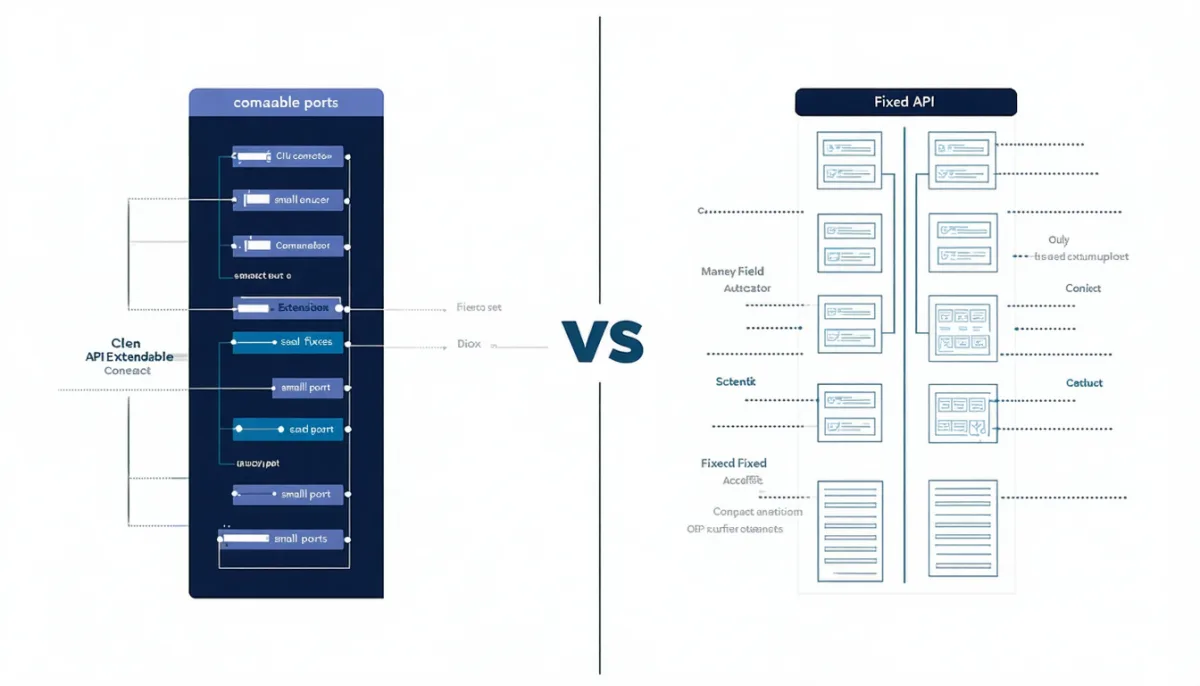
These numbers are deliberately not directly comparable, and that is exactly the point. Shopware’s 102 fields are the internal data model, which you can extend: your own fields, your own entities, your own relationships. Shopify’s 36 fields are an API surface — the façade of a system whose interior you never see. You can supplement it with metafields, but you cannot change the model behind it.
The practical difference shows up not on day one but at the first requirement nobody anticipated. A real-world example: tiered pricing per customer group with different minimum order quantities per article. In Shopware that is an extension of the pricing model. In Shopify it is a hunt for an app that happens to work exactly that way — or Shopify Plus with Shopify Functions.
41 mutations is the most informative number in this section. It describes precisely what a Shopify frontend may do: create a cart, change lines, apply discount codes, initiate checkout. Everything else is not provided for. That boundary is not a defect — it is the reason Shopify works so reliably. But you need to know it exists before you hold your requirements up against it.
Who actually maintains Shopware?
With open source the most important question is not “what can it do” but “who keeps it alive”. With a SaaS vendor, the vendor answers that question by existing. With self-hosted software you have to ask it yourself.
So we analysed the last six months of commits via the GitHub API, excluded bot accounts and separated pure docs: commits from code:
| Repository | Code commits (6 mo.) | Contributors | Largest share | Bus factor |
|---|---|---|---|---|
| shopware/shopware | 1,682 | 145 | 11.7% | 13 |
| shopware/shopware-cli | 456 | 23 | 75.0% | 1 |
| shopware/frontends | 116 | 8 | 36.2% | 2 |
The core is healthy: 145 contributors, and it takes 13 of them to cover half the work. No single developer accounts for more than 11.7%. That is a broad base — if someone leaves tomorrow, the project barely notices.
The periphery is more interesting. The Shopware CLI has a bus factor of 1: a single person is responsible for 75% of commits. That is not a catastrophe — it is a tool, not a core part of the shop — but it is a dependency worth knowing about if you build your deployment pipeline on it. The same applies to frontends, the package for headless projects, with a bus factor of 2.
For Shopify this question cannot be asked at all — the shop core is not public. Only the peripheral tools are public (Hydrogen, CLI, app libraries), and those say nothing about the platform. That is the most honest expression of the difference: with Shopware you can collect these numbers, with Shopify you have to trust the vendor. Which of the two is better depends on whether you would actually act on the numbers.
Customisation: apps against source code
Both systems can be extended, but in fundamentally different ways.
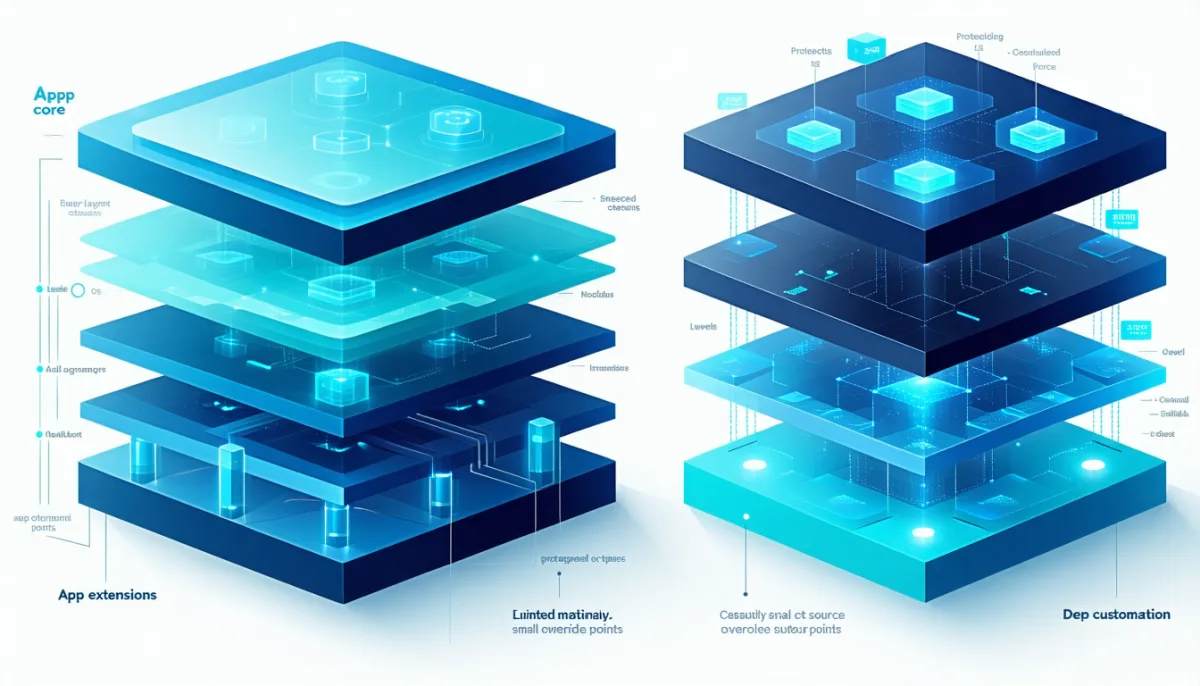
Shopify has three levels. The theme is written in Liquid and determines the look and structure of the shop. Apps attach additional functionality at defined points. Shopify Functions allow certain core logic to be replaced — discounts, shipping rules, payment customisations — though mostly on the Plus tier and only at the intended points.
Checkout is the most important special case. It was effectively untouchable for a long time and is now extensible through checkout UI extensions — but within a defined frame. You insert building blocks at designated positions; you do not rebuild the checkout. For most shops that is good, because Shopify’s checkout delivers measurably high conversion rates and you cannot optimise it into the ground. “Measurably” is the operative word: if you do test checkout changes yourself, note that most shops never reach the sample size required for a reliable result — our A/B testing guide shows with its own simulation how peeking at an ongoing test drives the false-positive rate from 5% to 32%. For a B2B process with quote approval, cost centres and invoice purchase subject to a credit check, it is a hard limit.
Shopware does not have that limit. The 2,046 overridable Twig blocks mean every visible part of the storefront can be replaced individually without touching the core. The 194 events allow intervention at practically any point in the business logic. And because the code is MIT-licensed, the route no plugin system anticipated remains open as a last resort.
The price for that sits in the same numbers. 873 migrations in the core means: this system changes, and your customisations have to travel with it. Every change you make today is work you will touch again at every major update. That is the essence of the maintenance cost in the model above — it is not a penalty for open source, it is the price of the freedom.
On ecosystem size Shopify leads quantitatively: the Shopware Store lists 3,401 extensions (as of 9 August 2026), and Shopify’s App Store is a multiple of that. Two qualifications. First, the count matters less than the fit — 20 apps covering 90% of your requirements beat 10,000 that do not. Second, Shopify apps are predominantly subscriptions: ten apps at $20 to $50 a month each are a real cost block that our model above does not even include. It pushes the break-even further in Shopware’s favour.
B2B: where the systems genuinely diverge
If the comparison becomes unambiguous anywhere, it is here.
Shopware ships B2B functionality as part of the platform from the Evolve plan onwards: B2B Components, customer-specific pricing, Dynamic Access, and in the Beyond plan additionally Multi-Inventory and Subscriptions. This is not a B2C system with B2B bolted on; it is part of the data model from the start — corporate customers with several buyers, approval processes and individual price lists are anticipated cases.
Shopify has caught up considerably with B2B on Shopify: company profiles, catalogue pricing per customer, payment terms. It works well for “we also sell the same products to retailers”. It reaches its limits as soon as the ordering process itself becomes complicated — multi-stage approvals, budgets per cost centre, customer-specific article numbers, quote negotiation before ordering.
The second major factor in German-speaking markets is ERP integration. Anyone who has to connect Sage, DATEV, an industry-specific ERP or a long-grown merchandise management system will more often find ready-made connectors and German-speaking partners with exactly that experience for Shopware. With Shopify the same thing runs through middleware or a custom integration against the Admin API — feasible, but rarely the path of least resistance.
How deep this goes is something we demonstrated at the data-model level in our Magento alternative comparison: systems that retrofit B2B differ structurally from systems that bring it along.

Operations, security and performance
With Shopify, operations are a non-issue. No server, no updates, no security patches, PCI DSS compliance included, scaling that holds on Black Friday. That is real value and frequently underestimated.
With Shopware, operations are your issue — even in the cloud variant, responsibility for extensions stays with you. And operations here does not just mean “the server is up”. It means applying updates before a known vulnerability is exploited. How quickly that becomes serious is something we experienced first-hand and documented in IT security vulnerabilities — one of our servers was hijacked for five days through a known flaw in a dependency we had not closed fast enough.
That is not an argument against Shopware. It is an argument for not setting the maintenance line in the cost model to zero just because you feel optimistic today. That line is precisely what decides the break-even.
On performance there is no blanket winner. Shopify delivers solid values out of the box via a global CDN, capped by whatever apps and theme add on top — an app-laden Shopify store is regularly slower than a cleanly built Shopware store. Shopware can be very fast with HTTP caching, decent hosting and a lean theme, but none of that happens by itself. If you want to know, measure instead of guessing: our Core Web Vitals test checks any URL against the real Google metrics.
Which system suits whom?
Shopify fits when:
- your monthly revenue is below roughly €175,000 and you have no development team
- you want to launch quickly and sell standard processes
- your business is B2C with manageable product logic
- operations, security and scaling should not be your problem
- you sell internationally and payment methods must simply work per market
Shopware fits when:
- your monthly revenue is well above the break-even and you have development capacity
- you model B2B processes with genuine complexity
- deep ERP or merchandise management integration is required
- you have requirements no standard system anticipates
- data sovereignty and independence from a vendor matter strategically
And the honest third case: if you cannot decide, Shopify is usually the cheaper choice. Moving from Shopify to Shopware is unpleasant but doable — the data is yours and it exports. The reverse route is more expensive, because you are then abandoning custom development you already paid for. When in doubt, take the option with the cheaper mistake.

Frequently asked questions about Shopify vs Shopware
Is Shopware cheaper than Shopify? Only within a window, not in general. In our model (AOV €75, €580 hosting and maintenance) Shopware is cheaper between roughly €175,000 and €1.14 million monthly revenue. Below that Shopify wins on low plan fees; above it Shopify Plus wins on its lower card rate of 1.3%. From around €1,294 in monthly fixed costs the window closes entirely — then Shopify is cheaper at every revenue level.
What is the difference between Shopware and Shopify? Shopify is a hosted SaaS platform: hosting, updates, security and scaling are included in the price, but the source code is inaccessible and customisation is only possible at designated points. Shopware 6 is open source under the MIT licence: you can read, modify and self-host the code, but you carry operations, updates and security yourself. In practice: with Shopify you rent a finished store, with Shopware you run your own. Commercially, the key difference is that Shopify takes a percentage of your revenue and Shopware does not — in exchange, Shopware creates fixed costs for hosting and maintenance.
At what point does switching from Shopify to Shopware pay off financially? Rarely, on the numbers alone. The largest cost advantage in our model is around €715 per month (roughly €8,600 a year), reached at about €604,000 monthly revenue. A mid-five-figure migration therefore takes some six years to pay for itself. Anyone switching should justify it with B2B requirements, ERP integration or data sovereignty — not with cost savings alone.
Is Shopware really free? The Community Edition is free and MIT-licensed — you pay Shopware nothing. Running it is not free: hosting, updates, security patches and development all accrue, whether you do them yourself or buy them in. In our model that is €580 a month before the first order arrives.
Does Shopify take a percentage of my revenue? Yes, in two forms. Shopify Payments card fees run from 2.1% + €0.30 (Basic) to 1.6% + €0.30 (Advanced). If you use an external payment provider, an additional Shopify transaction fee of 0.2% to 2% applies — on top of your own provider’s fees. Shopware takes no share of revenue.
Which is better for B2B, Shopify or Shopware? For complex B2B, clearly Shopware. B2B Components are part of the platform from the Evolve plan, including customer-specific pricing and access control, with Multi-Inventory and Subscriptions in Beyond. Shopify’s B2B features cover “we also sell to retailers” well but hit limits with multi-stage approvals, budgets per cost centre and quote processes.
Can I customise the checkout in Shopify? Only within limits. Checkout UI extensions let you insert building blocks at designated points, and Shopify Functions allow custom logic for discounts and shipping rules, mostly on the Plus tier. A freely built checkout does not exist. In Shopware the checkout is part of the storefront and fully overridable through the 2,046 Twig blocks.
How much work is migrating from Shopify to Shopware? The determining factor is not products and orders — those export — but everything that grew around them: app functionality that works differently in Shopware, custom theme logic, integrations and URL structure. Plan the data migration and the redirect strategy first and the design last; the reverse order is the most common project mistake. Budget a mid five-figure sum upwards.
What about GDPR and data sovereignty? You can run Shopware on a server of your choice in Germany — full data sovereignty stays with you. Shopify is a Canadian company processing on its own infrastructure; that is legally workable with a data processing agreement and standard contractual clauses, and many German shops operate that way, but you hand over control of the storage location. For companies with strict internal requirements this is often the deciding criterion.
Which Shopware version is current? At the time of writing, 6.7.13.0 is current, released on 5 August 2026. The core is MIT-licensed, publicly available on GitHub and actively maintained by 145 people.
Conclusion
Shopify vs Shopware is decided by two numbers that have nothing to do with features: your revenue and your maintenance cost.
On cost: Shopware is not “cheaper above a certain revenue” but cheaper within a window — in our model between roughly €175,000 and €1.14 million monthly revenue. Below it Shopify wins, because the Community Edition costs €0 but running it costs €580 a month before anything is sold. Above it Shopify wins again, because the Plus plan charges 1.3% and Shopware’s curve is the steeper one from there on. Both edges hinge on the same assumption: from around €1,294 in monthly fixed costs the window closes entirely — leaving no revenue level at which the Community Edition wins on paper. That is the number worth thinking hard about, not the plan fee.
We corrected this conclusion on 25 August 2026. The original version named only the lower break-even — not through carelessness, but because Shopify did not publish the Plus card rate at the time and we deliberately refused to guess the missing figure. As soon as it appeared, an open boundary turned into a second turning point. A model only reaches as far as the numbers that are public — and it ages the moment someone else supplies one of them.
On architecture: Shopware’s product model has 102 fields you can extend, 2,046 overridable template blocks and 194 events. Shopify’s Storefront API exposes 36 product fields and permits 41 write operations — a clean, reliable, finite surface. Neither is better. One is a toolbox, the other is a tool.
On maintenance: Shopware’s core is carried by 145 people, 13 of whom do half the work — a broad, healthy base. The periphery looks different: the CLI has a bus factor of 1. With Shopify the question cannot be asked at all, because the core is not public. That is the difference between verifying and trusting.
The uncomfortable truth to finish: most shops that want to move from Shopify to Shopware do not have a platform problem, they have a process problem — and they take it with them. Before you migrate, calculate the window with your numbers. And calculate honestly: even at its most favourable point the advantage is around €715 a month — too little to pay off a mid-five-figure migration in under six years. If you cannot name a concrete requirement Shopify structurally fails to meet — B2B depth, ERP, data sovereignty, a requirement with no standard solution — switching is an expensive answer to a question you have not yet asked.
For a broader view, Best shop system covers the whole landscape, Shopware 6 pricing and costs goes deeper on the cost side, and Magento alternative applies the same measuring approach to a third system.