
Most “best AI tools for small business” articles share a common flaw: they list enterprise software with price tags that would bankrupt a five-person team and call it a recommendation. HubSpot is a fine product. It is also $800 per month for the features that actually matter. That is not a small business tool. That is a tool for companies that have stopped being small but have not updated their self-image.
This guide is different. Every tool here costs less than $100 per month, solves a specific problem, and can be set up by someone who is not a developer. We tested each one with actual small business use cases, not hypothetical scenarios from a marketing deck.
The AI Tools That Actually Matter
Small businesses do not need twenty AI tools. They need three or four good ones that solve their biggest time sinks. For most businesses under 50 employees, those time sinks fall into four categories: writing and content, customer communication, operations and scheduling, and data analysis. Everything else is optimization that can wait.
The mistake most small business owners make is starting with the flashiest tool rather than the most impactful one. An AI image generator is fun. An AI tool that writes your customer emails in half the time pays for itself in the first week.
Writing and Content: Where AI Delivers the Fastest ROI
If your business produces any written content, whether that is blog posts, email newsletters, social media updates, or product descriptions, an AI writing assistant will save you more time than any other tool on this list.
ChatGPT Plus at $20 per month is the simplest recommendation here. It handles marketing copy, email drafts, social media content, blog outlines, and customer communications competently. For a small business owner who spends two hours a day on writing tasks, ChatGPT can realistically cut that to 45 minutes. Over a month, that is roughly 25 hours reclaimed.
The key to getting good output from ChatGPT is specificity. “Write a blog post about our product” produces garbage. “Write a 600-word blog post for our bakery’s website about why we use sourdough starters instead of commercial yeast. Our tone is casual and knowledgeable, like a friend who happens to be a baker. Mention that we have been using the same starter for 12 years.” That produces something usable.
For teams that need more structure, Jasper ($49 per month) provides templates, brand voice settings, and campaign management features that ChatGPT lacks. Jasper is overkill for a solo founder but useful for a small marketing team that needs consistency across multiple writers. The brand voice feature alone is worth the premium if you are tired of AI content that sounds nothing like your company.

Claude Pro ($20 per month) is worth considering if writing quality matters more than features. Claude produces the most natural-sounding prose of any AI tool currently available, which makes it particularly good for long-form content, thought leadership pieces, and anything where your audience would notice (and judge) AI-generated writing. The trade-off is a smaller feature set. No image generation, no built-in web search, fewer integrations.
Customer Communication: The Quiet Revolution
AI chatbots have graduated from “annoying popup that nobody uses” to “genuinely useful first line of customer support.” The improvement over the past 18 months has been dramatic.
Intercom’s Fin AI agent ($29 per resolution) handles customer questions by learning from your help docs, past conversations, and knowledge base articles. For a business that gets 200 support inquiries a month, Fin can resolve 100 to 140 of them without human intervention, at a cost of roughly $3,000 to $4,000 per month. That sounds expensive until you compare it to hiring a part-time support agent.
If Intercom’s per-resolution pricing feels unpredictable, Tidio ($29 per month for the Communicator plan, plus AI add-ons) offers a more traditional subscription model with AI-powered chatbot capabilities. It is less sophisticated than Intercom but more affordable and easier to set up. For businesses that primarily need a chat widget on their website that can answer common questions and route complex issues to a human, Tidio is a solid choice.

The real value here is not just cost savings. AI chatbots respond instantly, work at 3 AM, and never have a bad day. For e-commerce businesses especially, the ability to answer product questions and process simple requests around the clock translates directly into revenue that would otherwise be lost to abandoned carts and unanswered pre-purchase questions.
Marketing Automation: Do More With Less
Small business marketing in 2026 is fundamentally about leverage. You do not have a 10-person marketing department. You have yourself, maybe one other person, and a list of things that need to get done yesterday. AI tools can close that gap, but only if you choose the right ones.
Zapier ($19.99 per month for the Starter plan) is not technically an AI tool, but its AI features have made it indispensable for small business automation. You can set up workflows that automatically respond to form submissions, sync customer data between tools, post to social media on a schedule, and generate reports. The learning curve is minimal, and the time savings compound quickly.
The AI features Zapier added recently are particularly useful. You can now create custom AI agents that qualify leads, draft follow-up emails based on customer behavior, and analyze incoming support tickets to route them correctly. These are tasks that used to require either manual work or expensive specialized software.
For social media specifically, Buffer ($6 per channel per month) added AI writing assistance that generates post variations, suggests optimal posting times, and adapts your content for different platforms. If you spend an hour a day on social media management, Buffer’s AI features can cut that to 20 minutes.
Email marketing platforms have all added AI features, but the most useful implementation is in Mailchimp’s Standard plan ($20 per month for 500 contacts). Its AI can generate subject lines, predict send times, segment your audience based on behavior, and create automated email sequences. The subject line generator alone is worth the subscription. Subject lines are the single biggest factor in email open rates, and most small business owners are terrible at writing them. The AI is consistently better than the average human at this specific task.
Operations and Scheduling

Notion ($10 per user per month) has evolved from a note-taking app to a genuine operating system for small teams. Its AI features include automatic meeting note summarization, database auto-fill, project timeline generation, and document drafting. For a business that runs on Notion, the AI features reduce administrative overhead by roughly 20 percent.
The meeting summarization feature deserves special attention. If you use Notion alongside a video conferencing tool, it can transcribe meetings, extract action items, and assign them to team members automatically. For a business that spends 10 hours a week in meetings, this feature reclaims at least 2 hours of post-meeting administrative work.
For scheduling specifically, Reclaim.ai ($10 per user per month) uses AI to manage calendars across a team, automatically finding meeting times, protecting focus blocks, and adjusting priorities as deadlines shift. It is one of those tools that sounds like a minor convenience until you try it and realize how much cognitive overhead calendar management was consuming.
Data and Analytics
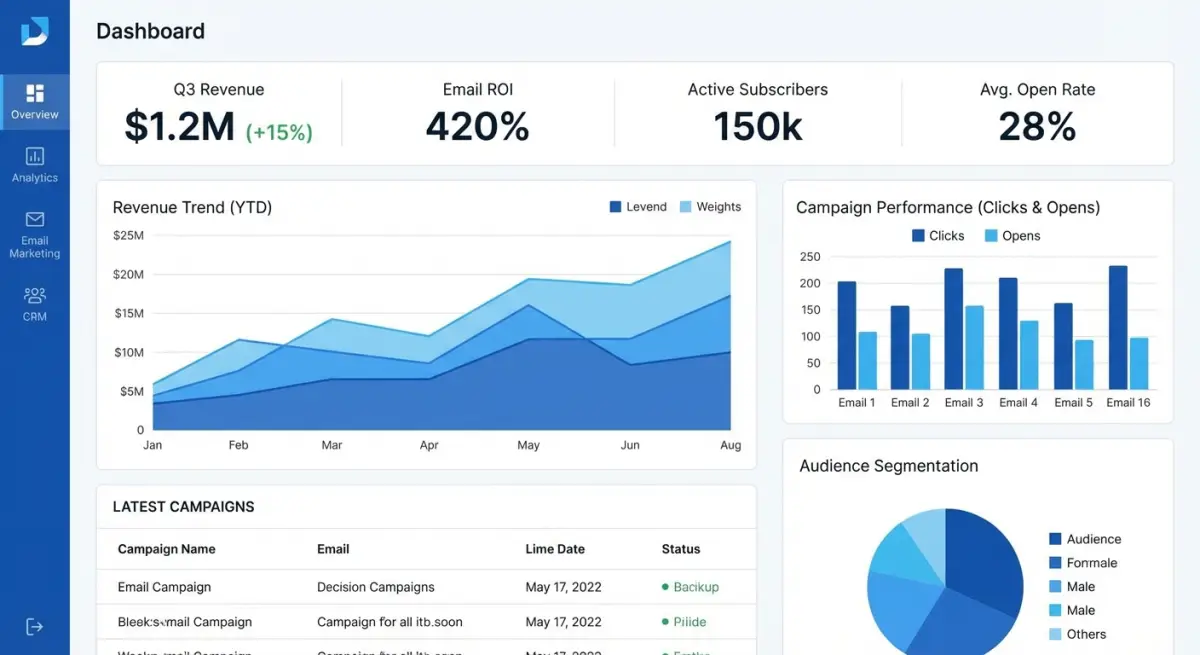
Most small businesses have more data than they know what to do with. Sales numbers, website analytics, customer behavior, inventory levels. The problem is not collecting data. It is making sense of it without hiring a data analyst.
Google’s Gemini, integrated into Google Sheets and the broader Workspace suite, is the most accessible option here. If your business data lives in spreadsheets (and for most small businesses, it does), you can ask Gemini to analyze trends, create charts, summarize patterns, and even build simple forecasting models. This is included with Gemini Advanced at $19.99 per month, which also gives you 2TB of Google Drive storage.
For more structured analytics, Coefficient ($49 per month) connects your data sources, from Shopify and Salesforce to Google Analytics and HubSpot, and uses AI to generate dashboards, flag anomalies, and produce written summaries of what your numbers mean. It is aimed at businesses that have outgrown spreadsheets but cannot justify a full business intelligence platform.
What Not to Buy
A few categories of AI tools consistently underdeliver for small businesses.
AI-generated video tools (Synthesia, HeyGen) produce output that still looks obviously artificial. For internal training videos, they are fine. For customer-facing content, they will make your brand look cheap. Wait another year.
AI phone call agents exist and technically work, but customer acceptance is low. Most people can tell they are talking to a robot, and most people do not enjoy it. If you need after-hours phone coverage, a traditional answering service is still the better choice for most businesses.
Autonomous AI agents that promise to run your business while you sleep are oversold. The technology is real and improving, but “autonomous” in 2026 still means “requires constant supervision.” You will spend as much time managing the AI agent as you would doing the work yourself, at least for now.
How to Start
Pick one pain point. Not three. One. The area where you or your team wastes the most time on work that does not require human judgment or creativity. Start there with a single tool. Use it for two weeks before evaluating.
For most small businesses, that first tool should be ChatGPT Plus or Claude Pro for writing tasks. The $20 per month cost is trivial, the learning curve is minimal, and the time savings are immediate. Once you have integrated AI into your writing workflow and seen the results, you will have a much better intuition for where else AI can help.
The businesses that get the most from AI are not the ones that adopt the most tools. They are the ones that deeply integrate a few tools into their daily operations and build habits around them. An AI tool you use every day for ten minutes is worth more than an AI tool you spent $500 on and used three times.
For a deeper look at how the major AI platforms compare, see our ChatGPT vs Claude vs Gemini comparison. Developers and technical founders should also check out our guide to The Best AI Coding Tools in 2026.