
Nobody looks for a Magento alternative out of curiosity. The trigger is almost always concrete: an upgrade that took three weeks instead of three days. A hosting bill that no longer makes sense against revenue. Or the question of what happens to Magento Open Source now that Adobe visibly puts its energy into Adobe Commerce.
The answers online are mostly lists: ten systems, one paragraph each, pros and cons in bullet points. Those lists are interchangeable because they are all copied from the same marketing pages. They answer “What exists?” — not the question you actually have: “Which of these survives the next five years?”
So for this article we measured two things ourselves instead of quoting them:
- The data model. Magento’s biggest cost driver is not a feature, it is an architectural decision from 2007. We counted it in the source code and put the alternatives next to it.
- The maintenance. We pulled 7,150 commits from six months across seven projects and analysed how many people actually keep each system alive. The result disagrees sharply with the GitHub star counts.
Every number below is reproducible with the commands shown. Where we had to correct ourselves while measuring, we say so — that is part of the method.
Why look for a Magento alternative at all? The honest trigger
Before comparing systems, one uncomfortable question: is Magento your problem — or is it your shop?
A platform migration is the most expensive answer available. Depending on catalogue and process complexity it costs a mid five-figure to six-figure sum, occupies your team for six to twelve months, and delivers zero new features to the customer. If your real problem is a slow theme layer, a bloated extension stack or missing caching, you are paying a fortune to change building sites rather than close one.
There are three situations where migrating is rational:
1. The version situation. Magento Open Source and Adobe Commerce follow the same release cycle but not the same focus. Current releases in the official repository (as of 8 August 2026): 2.4.9 on 12 May 2026, preceded by patch series 2.4.8-p5, 2.4.7-p10 and 2.4.6-p15 released the same day. If you sit on an older minor version you do not have a future security problem — you have a present migration obligation, just inside Magento.
2. Operating cost. Magento is not a shop you simply “host”. It is a distributed system that assumes several services. A look at the core composer.json shows what comes along:
curl -s https://raw.githubusercontent.com/magento/magento2/2.4-develop/composer.json | jq -r '.require | keys[]'It contains elasticsearch/elasticsearch, opensearch-project/opensearch-php, php-amqplib/php-amqplib (RabbitMQ) and four Redis-related packages. In total 80 runtime dependencies in the core alone, before your first extension. That is not a flaw — it is the shape of a system built for large catalogues. It is only expensive when your catalogue is not large.
3. The effort per change. And that has a cause almost nobody writes about, because it hides in the schema.
The real reason: EAV, counted
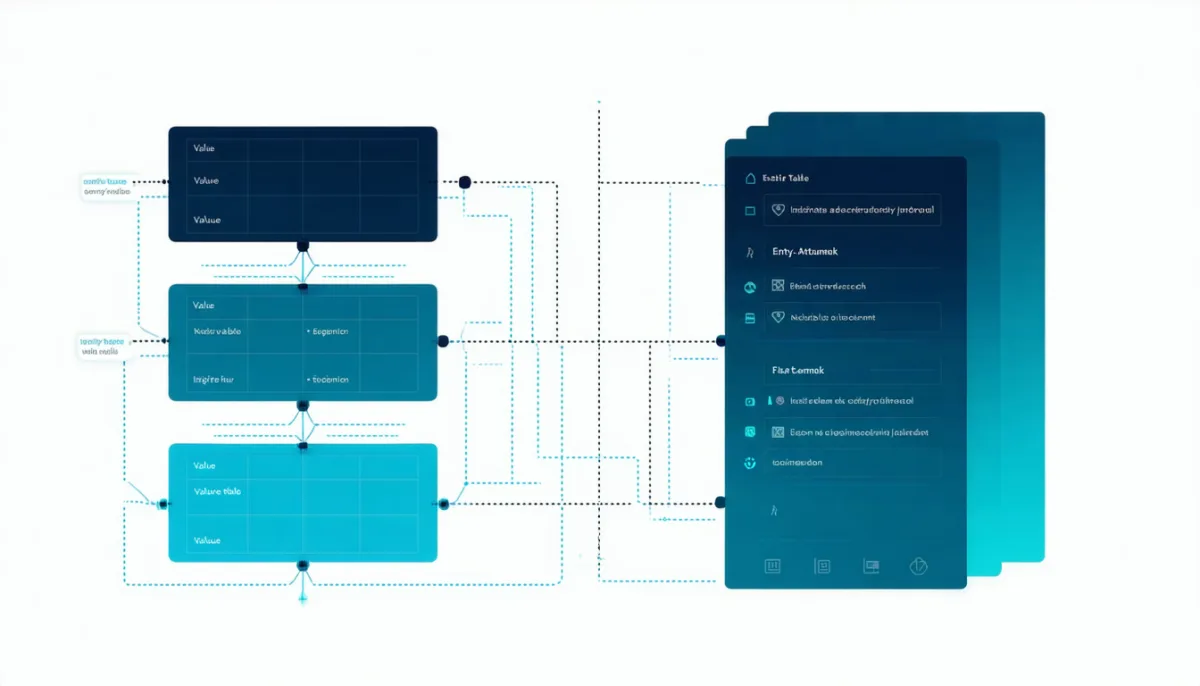
Magento stores products using the Entity-Attribute-Value pattern. Instead of one table with one column per property, there is a narrow entity table plus value tables where every single property lives as its own row.
That sounds abstract until you count it. We pulled the schema straight from the core:
git clone --depth 1 --branch 2.4-develop --filter=blob:none https://github.com/magento/magento2.git
grep -oP '<column xsi:type="[^"]+"[^>]*?name="\K[^"]+' \
  magento2/app/code/Magento/Catalog/etc/db_schema.xml
The result is the heart of this entire article:
| Table | Columns | Contents |
|---|---|---|
catalog_product_entity | 8 | entity_id, attribute_set_id, type_id, sku, has_options, required_options, created_at, updated_at |
catalog_product_entity_varchar | 5 | value rows (text) |
catalog_product_entity_int | 5 | value rows (integer) |
catalog_product_entity_decimal | 5 | value rows (decimal) |
catalog_product_entity_text | 5 | value rows (long text) |
catalog_product_entity_datetime | 5 | value rows (date) |
app/code/Magento/Catalog/etc/db_schema.xml, branch 2.4-develop, retrieved 8 August 2026. Only <column> elements were counted.
Read that first row again. Magento’s product table contains no name, no price and no description. It contains an ID, a SKU and administrative flags. Everything that makes a product a product lives somewhere else.
In total the core has 12 tables starting with catalog_product_entity and 21 tables prefixed eav_ that manage the rules around them. A default installation creates 43 product attributes (name, sku, description, price, special_price, weight, manufacturer, meta_title …), counted in app/code/Magento/Catalog/Setup/CategorySetup.php.
What this means in practice
A single product with 43 populated attributes physically lives across up to six tables. A product listing therefore needs either many joins or a precomputed intermediate state. That is exactly why Magento’s indexers exist — and we counted those too:
grep -rhoP '<indexer\s+id="\K[^"]+' magento2/app/code/Magento --include=indexer.xml | sort -u12 indexers in the core, including catalog_product_flat, catalog_product_price, catalog_category_product and catalogsearch_fulltext. Plus 15 cache types (--include=cache.xml).
This is the honest core of the Magento experience: the “flat” indexer is a machine that converts the EAV model back into exactly the flat table other systems have from the start. Every price change, every import, every attribute update triggers recalculation. The infamous question “why isn’t my change showing in the shop yet?” is not a user error — it is a direct consequence of this architecture.
And the upside? EAV is not stupid. It lets you run completely different product types per attribute set without ever writing a migration — a furniture retailer with 400 attributes for sofas and 30 for candles models that cleanly. If your catalogue really is that heterogeneous, EAV is a feature. For most shops it is not.
The counter-check: how do the others do it?
We asked the same question of the alternatives, each time at the place where the product is defined.
Shopware 6 defines products in ProductDefinition.php:
curl -s https://raw.githubusercontent.com/shopware/shopware/trunk/src/Core/Content/Product/ProductDefinition.php \
  | grep -cP "new \w+Field\("
105 fields, directly on the entity, 13 of them translatable (TranslatedField). Among them concrete commerce concepts that in Magento would each have to become an attribute first: stock, available_stock, restock_time, ean, min_purchase, max_purchase, purchase_steps, shipping_free, mark_as_topseller, rating_average.
Medusa (TypeScript) defines the product as a model with 23 fields directly in packages/modules/product/src/models/product.ts — including status (draft/published), handle, weight, hs_code, mid_code, origin_country.
Saleor (Python/Django) deliberately keeps the product core lean: 11 fields in saleor/product/models.py, with everything variant-specific in separate models.
| System | Product fields on the entity | Model |
|---|---|---|
| Magento 2 | 8 (no name, price or description) | EAV + 12 indexers |
| Shopware 6 | 105 (13 translatable) | flat + translation tables |
| Medusa | 23 | flat, modular |
| Saleor | 11 (lean core) | flat + variant models |
db_schema.xml (Magento, 2.4-develop), ProductDefinition.php (Shopware, trunk), product.ts (Medusa, develop), models.py (Saleor, main). All retrieved 8 August 2026. These numbers are deliberately not comparable in a “more is better” sense — they show where the information lives, not how much of it there is.
Why this table says more than any feature comparison: it explains why a simple task like “show me all products under €20, sorted by name” is an ordinary WHERE clause in Shopware, while in Magento it needs either multiple joins or a current index. That difference in development effort compounds over years — and it is the actual reason Magento hours cost more.
The candidates: who is genuinely in the running?
Mage-OS — the path with the smallest break
Mage-OS is a community fork of Magento Open Source, carried by a non-profit association. It is the only option here where your extensions, your team’s knowledge and your database largely stay where they are.
The release situation is healthy rather than symbolic: 3.3.0 on 5 August 2026, 3.2.0 on 14 July 2026, 3.0.0 on 20 May 2026, preceded by 2.0.0 in October 2025. A fork that ships three minor releases in three months is not a shop window.
But here it gets interesting, and this figure we found nowhere else. We compared the contributors of both projects across the same six months:
Of the 72 people who contributed to Mage-OS since 8 February 2026, 59 are also active in the official magento/magento2 repository — that is 82%.
That number cuts both ways, and both edges matter:
- Reassuring: Mage-OS is not a breakaway of disgruntled outsiders. It is largely the same people who also maintain Magento. The competence is real.
- Sobering: A fork whose contributors are 82% upstream people is not yet an independent insurance policy. If Adobe reduced its investment in open source, a large share of these people would disappear from paid working hours — and potentially from both repositories.
Genuinely Mage-OS-specific names include DavidLambauer, ProxiBlue, paales, rhoerr and Bashev — a recognisable but small independent core.
Who it fits: if your shop runs fine at its core and what bothers you is Adobe’s direction, Mage-OS is by far the cheapest answer. You keep EAV — including every cost we counted above. You are buying governance, not architecture.
Shopware 6 — the obvious migration in German-speaking markets
Shopware is the most common destination for Magento leavers in the DACH region, and for solid reasons: MIT licence, German vendor, deep familiarity with local requirements (invoicing, tax logic, GDPR practice), and an agency ecosystem that speaks the same language as your accounting department.
Technically it is a Symfony project with 131 runtime dependencies and PHP 8.2–8.5. Its release rhythm is the tightest in this comparison: v6.7.13.0 on 5 August 2026, with the 6.6 line maintained in parallel (v6.6.10.22 the same day). Two actively maintained major lines is a strong signal for migration friendliness — you are not forced to jump.
The price: Shopware is the product of a listed company with commercial editions. The core is MIT-licensed, but the question “which feature ends up paid-edition-only?” applies here exactly as it does with Adobe, just with a different sender. If you are leaving because of Adobe’s pricing policy, do not overlook that. We wrote up a detailed cost breakdown in Shopware 6 pricing and costs.
Medusa — headless, if your team knows TypeScript
Medusa is the most popular JavaScript-native system (35,640 GitHub stars, MIT licence) and the only one here from a different school of thought: it is not a shop with a frontend, it is a modular commerce backend toolkit to which you bring your own frontend.
That is an honest condition, not a drawback — but it is a condition. Anyone leaving Magento because the frontend is expensive gets a frontend at Medusa that they own entirely. For a team with Next.js experience that is liberation. For a team without that knowledge it is a second building site next to the migration.
Release cadence: v2.18.0 on 23 July 2026, preceded by v2.17.2 on 1 July 2026 — regular and well paced.
Sylius — when your shop is mostly special cases
Sylius is a Symfony-based “e-commerce framework” rather than finished shop software. If your business logic is unusual — B2B price tiers, complex approval flows, configurators — you work with the system here instead of against it. MIT licence, PHP ≥8.2, 125 dependencies, release v2.2.8 on 31 July 2026.
The drawback is the same coin’s other side: what you click together in Shopware’s admin, you program here. Without Symfony competence in-house, Sylius is the wrong call.
Saleor — API-first, Python, GraphQL
Saleor (BSD-3, 23,190 stars) is consistently GraphQL-first and written in Python. For teams with a Python/Django background or a strong data focus that is a natural home. The product core is deliberately lean (11 fields) — extensions run through attributes and custom models.
Important for context: in the measured six months Saleor had the lowest activity in the field with 296 commits and the smallest circle with 17 contributors. That is not a verdict on quality, but it is a concentration risk worth knowing.
Bagisto and the Shopify question
Bagisto (Laravel, MIT, 27,952 stars) is attractive for teams with a Laravel background — with one important caveat that our maintenance numbers below make visible.
And Shopify honestly belongs in any list of Magento alternatives, even though it is the only closed system here. For many merchants leaving Magento because of operational overhead, the right answer is not “a different self-hosted system” but “no self-hosted system at all”. If you can live with building extensions only within the sanctioned framework and paying transaction fees, you eliminate operational overhead entirely. We compared the wider landscape in Best shop system.
The measurement no feature comparison shows: who actually maintains it?
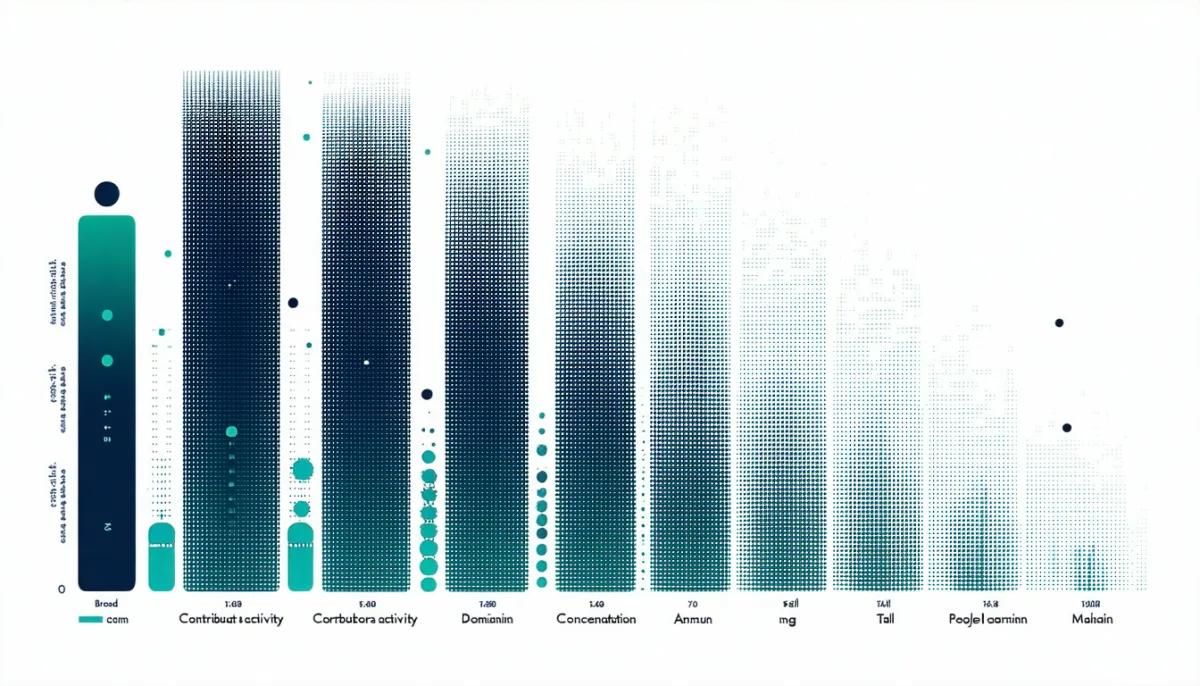
GitHub stars measure popularity, not maintenance. A project with 28,000 stars can depend on one person; a project with 3,400 stars can be carried by 150. For a platform decision with a five-year horizon, that is the more important value.
So we pulled every commit from the last six months (since 8 February 2026) from seven repositories — completely, not as a sample:
# paginate through all pages, not just the first
curl -s -H "Authorization: token $TOKEN" \
  "https://api.github.com/repos/$REPO/commits?per_page=100&page=$p&since=2026-02-08T00:00:00Z"
Then we excluded bot accounts ([bot], -ci, svc, GitHub Actions) and pure documentation commits (docs:) to measure who actually works on the product.
| Project | Total commits | Code commits | Contributors | Top-1 share | “Bus factor 50” |
|---|---|---|---|---|---|
| shopware/shopware | 1,761 | 1,696 | 146 | 11.6% | 13 |
| medusajs/medusa | 915 | 566 | 132 | 39.9% | 2 |
| magento/magento2 | 1,978 | 1,876 | 88 | 7.9% | 10 |
| mage-os/mageos-magento2 | 851 | 802 | 68 | 7.6% | 10 |
| Sylius/Sylius | 780 | 777 | 34 | 27.2% | 2 |
| bagisto/bagisto | 772 | 751 | 29 | 60.7% | 1 |
| saleor/saleor | 296 | 254 | 17 | 25.6% | 3 |
docs:. “Bus factor 50” = number of people who together account for at least 50% of code commits. Retrieved 8 August 2026.
What follows from this — including against our own first reading
Three findings a feature table never shows:
1. Shopware has the broadest base in the field. 146 contributors, no dominant individual (11.6%), and it takes 13 people to explain half the work. For a migration decision that is the single strongest argument in this table — stronger than any feature list.
2. Magento is not dead. This needs saying clearly against the mood online: 1,876 code commits in six months, 88 contributors, bus factor 10. Anyone migrating out of fear of stagnation is migrating for the wrong reason. The good reason is architecture and operating cost, not “the project is dying”.
3. Stars lie most reliably. Bagisto has far more stars (27,952) than Shopware (3,400) — and a single person contributes 60.7% of code commits. If that person steps away, the project stalls. That is precisely the kind of risk you must know about in a five-year decision.
And a correction to ourselves: our first analysis gave Medusa a bus factor of 1 with a 52.6% top-1 share — an alarm value. Before writing that, we read that person’s commit titles. Result: the majority were docs: commits (API reference, guides, partly automated). After excluding documentation commits the share drops to 39.9% and the bus factor rises to 2. Still concentrated, but a different statement.
The lesson generalises beyond Medusa: a metric that throws documentation and core development into the same bucket measures diligence, not dependency. With the first number we would have publicly portrayed a project as more fragile than it is — and the number would have looked entirely plausible.
What a migration actually costs
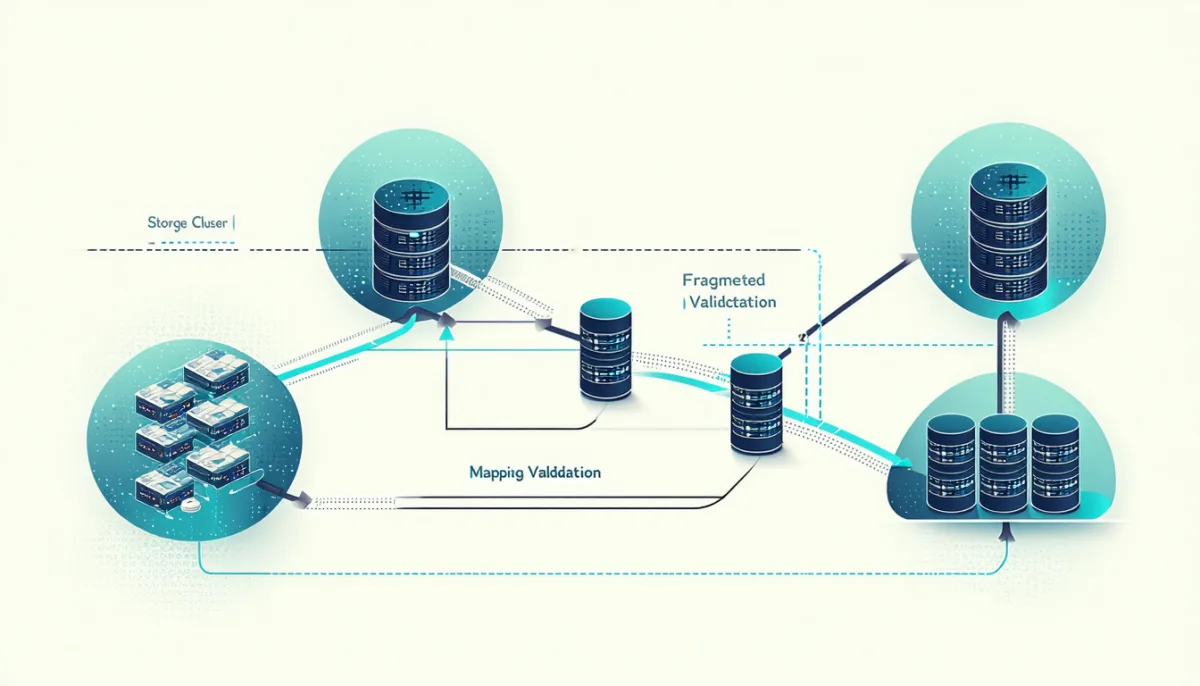
The most expensive part of a shop migration is not design or features. It is the data — for a reason that follows directly from the EAV table above.
You are not migrating from one schema to another. You first reconstruct what your schema even means. In Magento the product name is not in the product. It is in catalog_product_entity_varchar, in a row that points via attribute_id to an entry in eav_attribute, and that can differ per store view via store_id. An export script has to rebuild that resolution correctly for every attribute, every store and every product.
Realistic effort blocks, in the order in which they get underestimated:
- Attribute mapping — which of the 43 default attributes plus your own exist in the target? What becomes a field, what becomes a property, what gets dropped? That is a business decision, not a technical one, and it is where projects stall.
- Customer data and password hashes — passwords cannot be re-encrypted. Either the target system supports the old hash algorithm as a transition, or every customer has to reset their password. That is a marketing and support decision, not a migration detail.
- Order history — old orders are subject to tax retention rules and reference product states that no longer exist. Often the most pragmatic solution is to archive history read-only rather than migrate it fully.
- URLs and SEO — every indexed product and category URL needs a 301 redirect. Without them you lose rankings you spent years earning. This is where technically clean migrations fail commercially.
- Extension logic — every extension carrying business logic must be replaced or rebuilt. This is where the surprises live, because nobody remembers why a module was added in 2019.
Practical advice: measure how fast your current shop actually is before the migration, then again afterwards — same pages, same method. Without a “before” value, any statement about success is opinion. Our Core Web Vitals test gives you a reproducible baseline.
The decision: which Magento alternative fits you?

Instead of a recommendation that applies to everyone (there isn’t one), five questions with clear consequences:
“My shop runs fine technically, I just don’t trust Adobe any more.” → Mage-OS. Smallest break, lowest cost, same extensions. You are solving a governance problem, not a technical one — and you keep EAV with all its operational overhead.
“I’m in the DACH region, I need a maintained ecosystem and I want out of EAV.” → Shopware 6. Broadest contributor base in the test (146), flat data model with 105 product fields, two release lines maintained in parallel, dense local agency coverage.
“My team is strong in TypeScript and we want to own the frontend.” → Medusa. Modular, API-first, active. Condition: you build and own the storefront yourselves.
“My business logic is the actual special case.” → Sylius (with Symfony competence) or Saleor (with Python/GraphQL competence). Both are frameworks, not finished shops — the effort is front-loaded, the freedom comes later.
“I mainly want to get rid of the operational overhead.” → Shopify or managed hosting. The most honest answer for many merchants migrating out of exhaustion, who would otherwise get the same problem in new syntax.
Three things to measure before deciding
- Count the attributes you actually use. Not the ones created — the ones used. If it is under 30 and similar across all products, EAV is pure overhead for you with no return. If it is 300 across wildly different product groups, Magento/Mage-OS is architecturally closer to your problem than any flat alternative.
- Count your extensions carrying real business logic. Pure design extensions are cheap to replace. Every extension that calculates prices, availability or processes is its own small migration project.
- Check the maintenance situation yourself, shortly before deciding. Our numbers are from 8 August 2026. The commands above give you your own current picture in ten minutes — and you should not trust any comparison article that does not tell you how it measured. Including this one.
Frequently asked questions
Is Magento Open Source dead? No — the numbers say so clearly. 1,876 code commits from 88 contributors in six months, plus release 2.4.9 on 12 May 2026, is not stagnation. The legitimate concern is not death but priority: Adobe’s development focus is visibly on Adobe Commerce. If you migrate, do it because of architecture and operating cost, not because of a predicted death.
What is the difference between Magento Open Source, Adobe Commerce and Mage-OS? Magento Open Source is the free, self-hosted version. Adobe Commerce is the commercial edition with additional features and support. Mage-OS is a community fork of Magento Open Source under a non-profit association — largely compatible technically, with its own release cadence (3.3.0 on 5 August 2026). We examined Magento’s content side in detail in Magento CMS.
Is Mage-OS really independent of Adobe? Organisationally yes, in terms of people only partly. Our measurement: 82% of Mage-OS contributors over the last six months are also active in the official Magento repository. That speaks for competence and compatibility, but it also means a withdrawal of Adobe-funded development time would hit both projects simultaneously.
Which Magento alternative is best for small shops? For small catalogues Magento is almost always oversized — the 80 core dependencies alone, with Elasticsearch/OpenSearch, RabbitMQ and Redis, create operational overhead small shops can rarely justify. Sensible options are Shopware 6, a hosted system like Shopify, or WooCommerce if you are close to WordPress.
Can I bring my Magento extensions with me? Only to Mage-OS. Any other move means replacement or rebuilding. That is usually the single largest cost block of a migration — and the reason to inventory before deciding which extension genuinely carries business logic and which is only cosmetic.
How long does a migration from Magento to Shopware take? That depends almost entirely on catalogue complexity and extension landscape, not on design. The determining factor is attribute mapping: with a homogeneous catalogue and few attributes it is manageable; with a grown catalogue of hundreds of attributes across multiple store views it is the bulk of the project. Plan the data migration first and the design last — the reverse order is the most common project mistake.
Is headless (Medusa, Saleor) automatically better? No. Headless shifts responsibility, it does not remove it. You gain freedom in the frontend and lose everything an integrated system ships with — templates, backend preview, ready-made checkout interfaces. For teams with strong frontend competence that is a win; for everyone else it is an additional building site.
Conclusion
The most honest answer to “what is the best Magento alternative?” is: it depends on why you are asking — and most comparison lists never answer that question, because they count features instead of causes.
The two things we measured say more than any feature table:
On the data model: Magento’s product table has 8 columns and contains neither name nor price nor description. Everything substantive lives in five value tables beside it, held together by 12 indexers. Shopware puts the same information in 105 fields directly on the entity. That is the real reason for the difference in development effort — and it does not disappear with better hosting.
On maintenance: Shopware is carried by 146 people and needs 13 of them for half the work. Bagisto has eight times as many GitHub stars as Shopware and one single person behind 60.7% of code commits. Stars measure attention, not future.
And the finding that contradicts expectations most clearly: Magento is not dead. 88 active contributors, 1,876 code commits in six months. If you migrate, do it because of EAV, because of the 80 core dependencies and because of operating cost — those are good, measurable reasons. Migrating because of an assumed expiry date is the most expensive reason of all.
If you want the wider comparison, Best shop system covers the landscape as a whole and Shopware 6 pricing and costs covers the cost side of the most common migration target. For the same kind of analysis applied to content systems, see Modern WordPress alternative.